
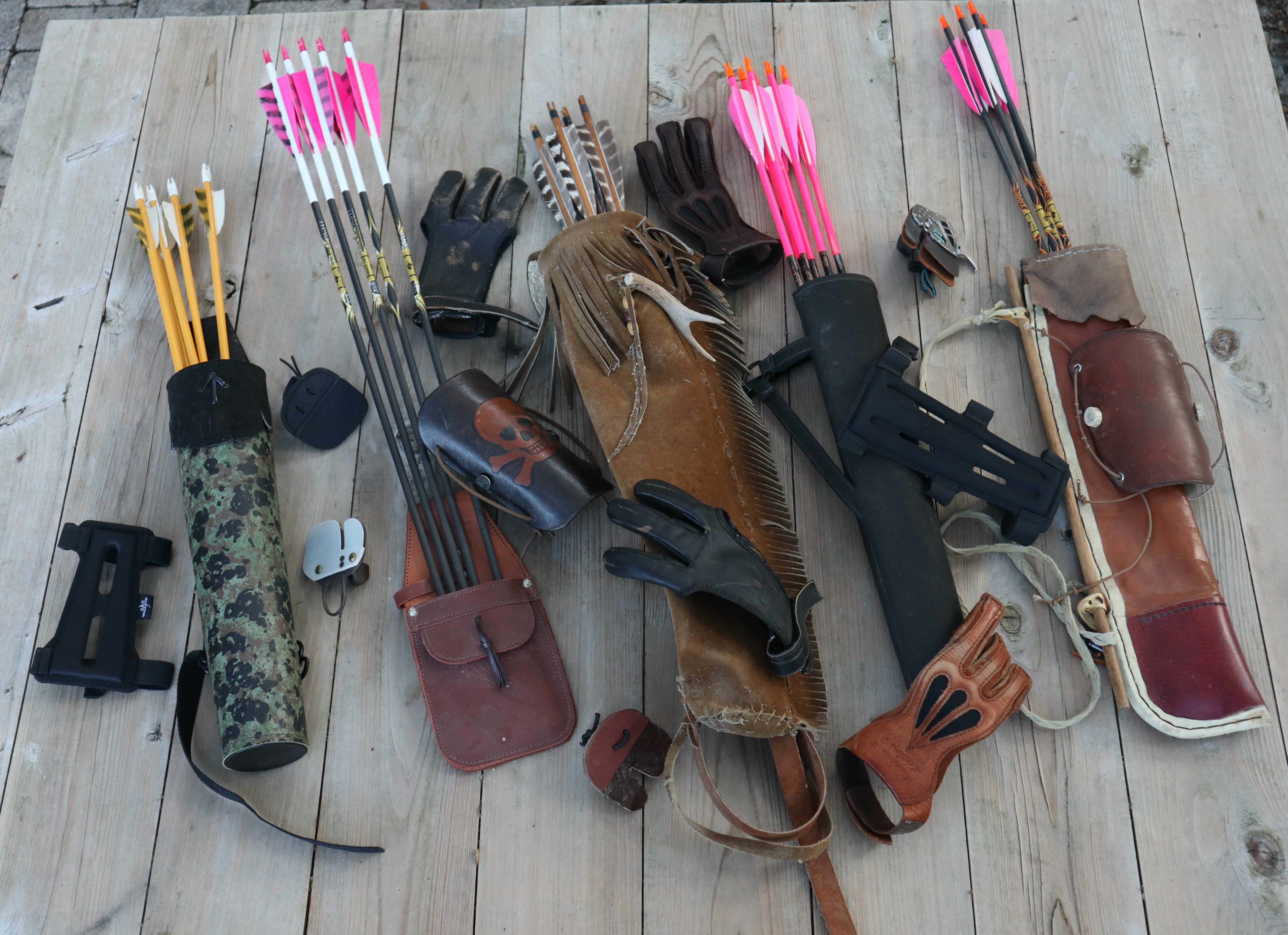
In this article we will discuss arm guards, finger protection and arrow quivers. And they will make your archery experience better, more efficient and less painful. As well as review some of the options of each item.

Arm guards
Arm guards are exactly what they sound like. They protect your bow arm from string slap, which is when the bow string strikes your forearm after the arrow is released. Trust me on this, you want to avoid that! Most of the time, a few simple form corrections will solve this issue. But it only takes a small lapse for the string to strike. It’s too easy to wear an arm guard to take the chance. Select one that covers 2/3 to 3/4 of the space between your wrist and the bend of your elbow.

Finger Protection
Pulling a bowstring with only three fingers creates a lot of pressure over a small space. Fortunately, they make something for that. Finger tabs, archers gloves and “finger savers”.
Finger Tabs
Finger tabs are a small piece of leather or synthetic material that are worn on the drawing hand and protect the fingers from the string. They can be as simple as a single layer of leather to several layers trapped within a pair of brass plates. Normally available in different sizes, select one that is at least as wide as the first 3 fingers of your drawing hand. The leather can be trimmed to fit as necessary with a good pair of scissors.

Archer’s Glove
The archer’s glove is just that, a glove. Except it only covers the index, middle and ring fingers, the ones you draw the bow with. They come in two basic designs: one that covers the whole finger and one that covers only the top portion that contacts the string. Generally made from pliable leather with a more durable and slicker leather or synthetic on the finger tips. Like tabs, the thickness varies to offer different levels of protection. Again, these are sized like gloves. Choose one that fits snug on your fingers and with the least amount of excess material extending past your finger tips. Remember, leather stretches and softens with use. Gloves and tabs both require a small amount of break in.

Finger Savers
Finger Savers are silicone, plastic or rubber sleeves that fit directly on the bowstring. They are about as big around as a pencil and are easily installed. These work very well for younger children. While not accurate as the other two options, these are definitely convenient. Anyone can use them and they are attached to the bowstring, so it’s one less thing to keep up with. They come in a variety of colors, so you can add a touch of color to your bow to suit your style.

In some cases lighter weight bows do not require finger protection. Finger savers and gloves are ambidextrous, as well as some tabs. Some are draw hand specific, make sure to check before ordering.
Arrow Quivers
To list all the different types of quivers would make me sound like Bubba telling Forrest Gump all the ways you can cook shrimp. So let’s stick to the basics. Everyone knows the back quiver, it is an iconic part of the archer image. Certainly there is a degree of “cool” that goes with drawing an arrow from over your shoulder and placing it on the bowstring. But there is a learning curve for this quiver and a lot of fumbling and dropping arrows until you master it. The side quiver is a better and more common choice for most archers starting out and virtually all target archers. The quiver attaches to a belt or clips to your pants on your draw hand side, putting your arrows within easy reach. Side quivers can be a simple sleeve or tube, just for arrows or have multiple pockets and compartments for storing basic shooting gear. Some side quivers are ambidextrous and can be used on either side. Others specify left or right handed. This refers to the hand you draw the bow with. A ground quiver can be a good option for a backyard range. Just drop your arrows in and shoot away.

Chose one of each of these accessories that fit you well and serve their purpose. Don’t be afraid to try different styles and sizes until you find ones that suits your style and skill. These gear choices will become very personal for you, same as they are for other archers.
Continue Your Archery Learning
The following resources provide more information and support in your archery education:
- Three Need To Know Things When Choosing Your Arrows
- Three of the Best DIY Archery Targets and How to Make Them
- Seven Important Guidelines For Range Safety in Archery


Leave a Reply to Beginners Guide To The Four Basic Types Of Archery Bows – Ascham Oaks ArcheryCancel reply